The Best Micro‑Workouts for Parents Balancing Fitness and Family (2026 Guide)
- Wendell Caesar
- Apr 5
- 4 min read

If you’re a parent in 2026, you already know the truth: long workouts are a luxury. Between school drop‑offs, work meetings, Taekwondo classes, dinner, and the nightly “Did you brush your teeth?” routine, carving out an hour for the gym feels impossible. But here’s the good news—micro‑workouts have become one of the most effective, research‑supported ways for busy adults to stay strong, energized, and healthy without rearranging their entire day.
Micro‑workouts aren’t shortcuts. They’re strategic, time‑efficient, and science‑backed. And for parents, they’re a game‑changer.
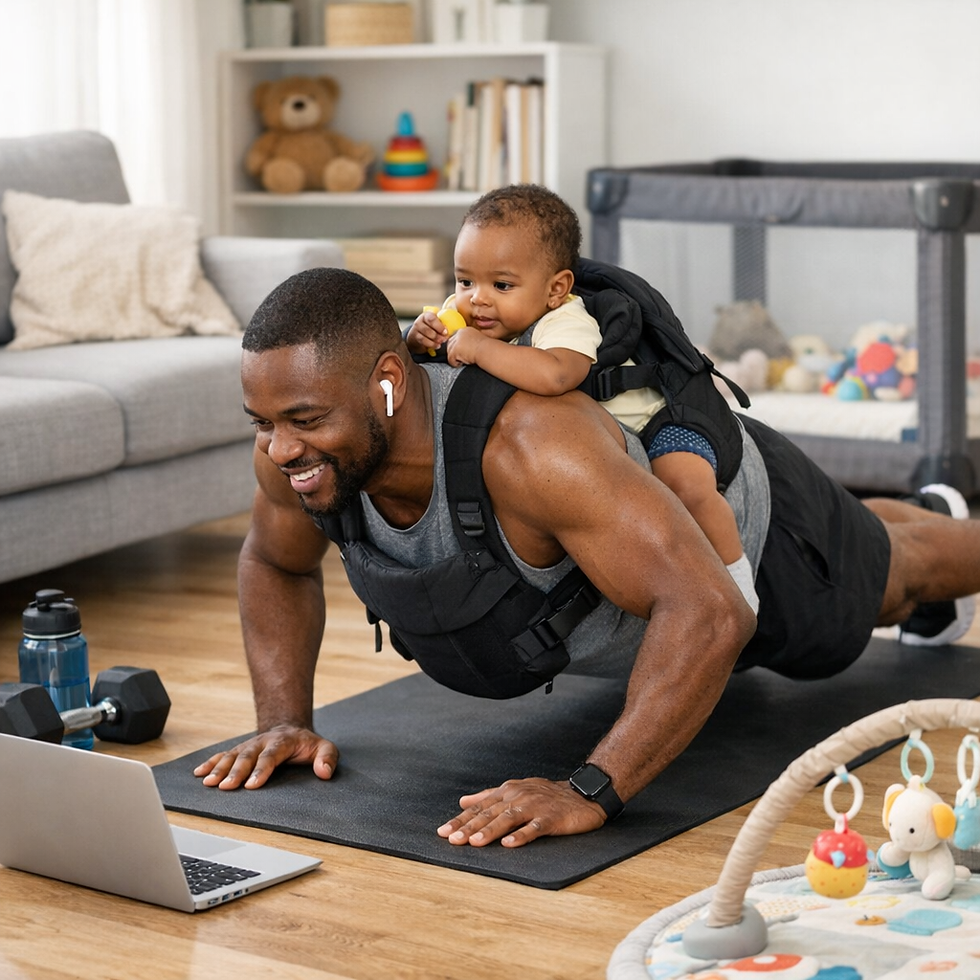
Why Micro‑Workouts Work (The Science in Plain English)
Micro‑workouts—short bursts of focused exercise lasting 3 to 15 minutes—are built on two key principles:
1. Exercise “Snacks” Improve Metabolic Health
Studies published in Sports Medicine and The Journal of Physiology show that short, intense bouts of movement throughout the day improve glucose control, cardiovascular health, and energy levels as effectively as longer sessions.
2. Consistency Beats Duration
Research from the American College of Sports Medicine highlights that frequency matters more than session length. Five 10‑minute workouts per week can match or exceed the benefits of two long gym sessions.
3. Parents Benefit Even More
Because micro‑workouts reduce stress hormones and boost mood quickly, they fit perfectly into the unpredictable rhythm of family life.
You don’t need a gym. You don’t need equipment. You just need intention—and a few minutes.
The 2026 Parent‑Friendly Micro‑Workout Framework
This framework is built for real life: interruptions, tight schedules, and days when you’re running on fumes.
The Formula
5–15 minutes
One focus per session
Minimal setup
Movements that build strength, mobility, and longevity
The Weekly Structure
2 strength micro‑workouts
2 cardio or conditioning micro‑workouts
1 mobility or recovery micro‑session
If you have more time, great. If not, this structure still moves the needle.
The Best Micro‑Workouts for Busy Parents
Below are information‑dense, high‑impact, zero‑fluff workouts you can plug into your week immediately.
🟦 1. The 10‑Minute Strength Builder (No Equipment)
Goal: Build functional strength for parenting life—lifting kids, carrying groceries, staying injury‑free.
Timer: 40 seconds work / 20 seconds rest × 10 rounds
Movements:
Air Squats
Push‑ups (regular or incline)
Reverse Lunges
Plank Hold
Glute Bridges
Shoulder Taps
Hip Hinge Good Mornings
Dead Bug
Wall Sit
Slow Mountain Climbers
Why it works:
This sequence hits every major muscle group and reinforces core stability—critical for parents who sit, drive, and bend constantly.
🟩 2. The 5‑Minute “Energy Reset” Workout
Perfect between meetings or before picking up the kids.
Do each for 45 seconds with 15 seconds rest:
March in place with high knees
Arm circles + shoulder mobility
Bodyweight good mornings
Standing core twists
Deep breathing with overhead reach
Why it works:
This resets posture, boosts blood flow, and reduces stress hormones—like a mini‑vacation for your nervous system.
🟥 3. The 12‑Minute Conditioning Circuit (HIIT‑Lite)
Format: 30 seconds on / 15 seconds off × 3 rounds
Movements:
Fast step‑backs
Squat to calf raise
Modified burpees
Side lunges
Plank jacks
Power march (high knees without impact)
Why it works:
You get cardio benefits without pounding your joints—ideal for parents who want longevity, not burnout.
🟨 4. The 7‑Minute Core & Stability Routine
Movements (1 minute each):
Dead Bug
Side Plank (right)
Side Plank (left)
Bird‑Dog
Slow Mountain Climbers
Hollow Hold (or tuck hold)
Glute Bridge March
Why it works:
A strong core makes everything easier—carrying kids, sitting at a desk, and even Taekwondo training.
🟪 5. The 10‑Minute Mobility Flow for Parents
Flow sequence (repeat twice):
Cat‑Cow
Thoracic spine rotations
Hip flexor stretch
Hamstring sweep
Ankle mobility rocks
Deep squat hold
Chest opener stretch
Why it works:
Mobility is the antidote to “parent posture”—tight hips, rounded shoulders, stiff lower back.
How to Fit Micro‑Workouts Into a Parent’s Real Day
Here’s how parents actually use micro‑workouts in 2026:
During kids’ screen time → 10‑minute strength
Between meetings → 5‑minute reset
Before showering → 7‑minute core
After dinner → 10‑minute mobility
While kids get ready for bed → 12‑minute conditioning
You’re not “finding time”—you’re using the time you already have.
The Parent Advantage: Why Micro‑Workouts Stick
Parents succeed with micro‑workouts because:
They’re flexible
They don’t require motivation
They build momentum
They reduce guilt (“I didn’t work out today”)
They create a foundation for long‑term fitness
And most importantly—they model discipline and health for your kids.
Action Steps: Start Your Micro‑Workout Routine Today
Here’s a simple plan to begin:
Step 1: Pick two micro‑workouts from this post.
Strength + mobility is a great combo.
Step 2: Schedule them into your day.
Attach them to existing habits:
After brushing your teeth
Before your first meeting
After school pickup
Step 3: Track your streak.
Use Apple Fitness+, Strong App, or a simple notes app.
Step 4: Increase intensity only when it feels natural.
Micro‑workouts are about consistency, not punishment.
Closing Reflection
As parents, we don’t always get long stretches of time for ourselves—but we do get moments. Micro‑workouts turn those moments into strength, energy, and longevity. They help us show up better for our kids, our work, and ourselves.
You don’t need an hour. You just need intention—and a few minutes.
If you try any of these micro‑workouts this week, share your experience. Your story might inspire another parent who’s trying to get back on track.


Comments